How to Build Your Nursing NetworkWritten by:
University of Tulsa
• Aug 19, 2026
If you’re a nurse interested in career advancement, you’ll need to keep your clinical skills sharp and your medical knowledge up to date. These practical nursing skills aren’t the only essential ingredients for professional development, however. You can also build a robust nursing network, including meaningful connections with other professionals in the field.
Nurses looking to advance their education and careers can benefit from cultivating these competencies and learning how to foster the kinds of relationships that lead to ongoing professional growth.
What Is a Nurse Network?
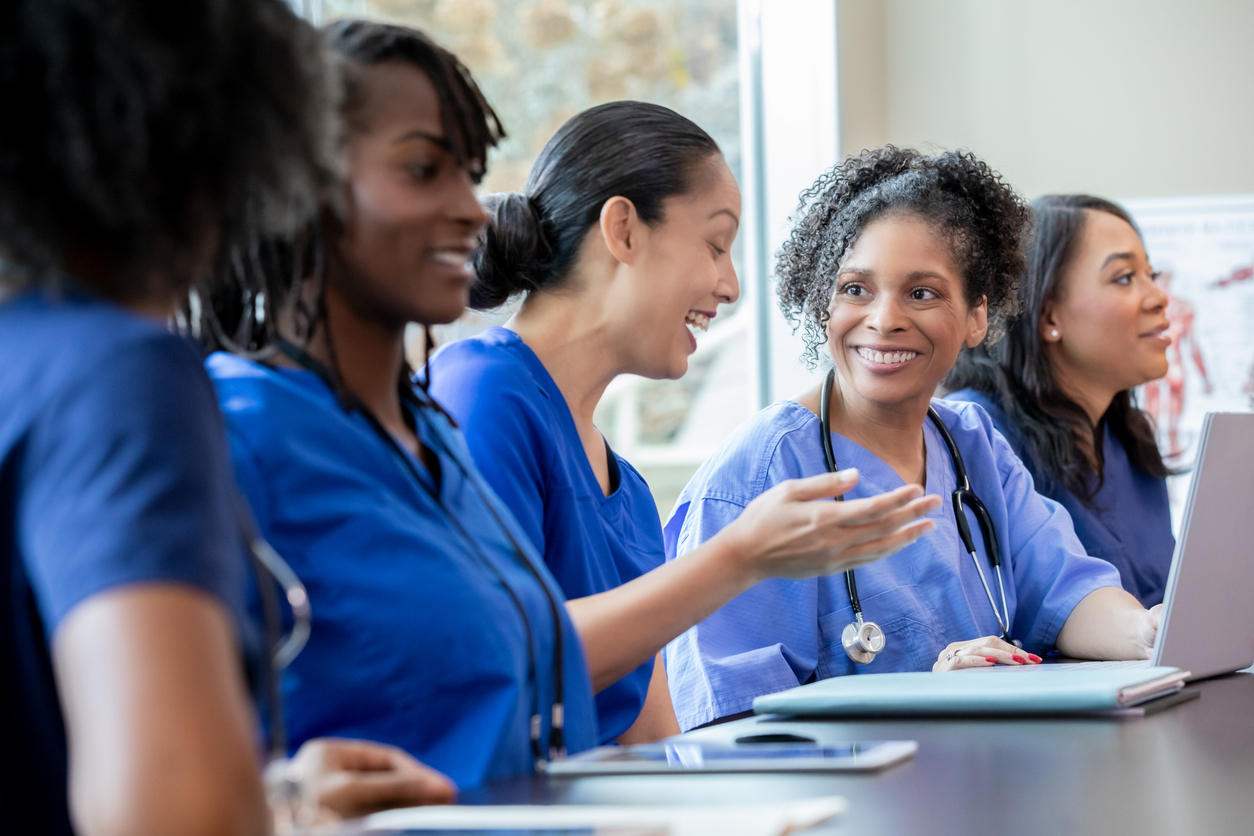
A nurse network is a group of peers that nurses connect with for knowledge, resources, and emotional well-being. Networking can occur through professional associations, local study clubs, and nursing conferences. Social media is also a valuable tool for building your network.
Nurses who engage in networking do so to hone their own skills, learn about advances in the field, and explore avenues for career transition or growth. While networking benefits nurses, it can also benefit patients by enabling nurses to provide an even higher standard of safety and care.
What Are the Benefits of Having a Nurse Network?
Those who work in the nursing profession can reap numerous benefits from intentional and consistent networking.
Career Advancement
Getting to know other nurses in face-to-face settings or even forging meaningful online friendships can be crucial for nurses who hope to change roles. A nurse network can be a catalyst for a career change to nursing and may even open the door to non-bedside nursing jobs.
Encouragement and Support
Working as a nurse can be hard in many ways, from the physical toll of working long shifts to interactions with difficult patients. One reason to build a network is simply to explore opportunities to seek emotional support.
Skill Development
Spending time talking with other nurses may also yield insights into different methodologies or new techniques, all of which can lead to more efficient patient care. Networking can be an especially good way to get tips for new nurses.
Progressing the Field
Having a nurse network is not only an opportunity to receive but also a chance to give back. Nurses who engage in a network can share their wisdom, perspective, and experience to the benefit of other professionals within the same field.
Adapting to a Changing Workforce
The U.S. Bureau of Labor Statistics projects that over 160,000 new nurses will enter the workforce between 2024 and 2034. However, the National Center for Health Workforce Analysis still projects a 3% shortage (108,960 full-time equivalent) of nursing personnel through 2038.
As the health care workforce shifts due to retirements, burnout, and expanding advanced‑practice roles, nurses benefit from strong professional connections that help them stay informed and adaptable.
Tips for Cultivating a Nurse Network
No blueprint or special formula for developing a network exists, and often the best connections happen organically. However, some tips are available that can help you create more opportunities and leverage the ones that come your way.
1. Show Up to Events
Nothing is more important than actively pursuing opportunities to mix and mingle with other nurses. From professional conferences and seminars to local study clubs, there are always events worth seeking out. Consistently going to these events is one of the best ways to establish a meaningful nurse network.
2. Join Professional Organizations
Becoming a member of professional organizations is a helpful way to remain in the loop about conferences, events, and opportunities for advancement in the nursing profession. Explore some of the organizations you can consider:
American Nurses Association (ANA): The ANA is one of the most recognized nursing organizations in the country. Membership provides access to policy updates, continuing education, advocacy efforts, and a nationwide community of nurses committed to advancing the profession.
Academy of Medical-Surgical Nurses (AMSN): The AMSN supports nurses working in medical‑surgical settings by offering specialty resources, certification support, conferences, and a strong peer network focused on improving patient outcomes.
American Organization for Nursing Leadership (AONL): The AONL is ideal for nurses interested in management or executive roles. Members gain access to leadership training, mentorship opportunities, and national events focused on health care innovation.
American Association of Critical-Care Nurses (AACN): The AACN is the leading organization for critical‑care nurses. It offers extensive clinical resources, specialty certifications, and a supportive community dedicated to excellence in high‑acuity care.
3. Volunteer
Using clinical skills in a volunteer setting, even if that just means working for a couple of hours a month at a community vaccine clinic, can be an important way to meet different people and forge connections beyond the day-to-day work environment. Organizations like the American Red Cross provide numerous opportunities for nurses to volunteer in clinical care and leadership roles.
4. Use Social Media
Social media networks can be important avenues for building a profile, demonstrating thought leadership, and sharing subject-matter expertise. LinkedIn can be an especially good platform for connecting with location- or industry-specific nursing groups. TikTok can also offer opportunities to connect with fellow nurses and see tips from other nursing professionals.
5. Consider Cross-Training
Seeking ongoing training in different disciplines or specialties can be another important way to broaden your professional horizons and be better prepared for any new career opportunities that do emerge.
Online Nursing Communities and Social Networking
Online nursing communities have become an essential part of modern networking, offering nurses a way to connect, learn, and share experiences regardless of location or schedule. Many nurses turn to digital platforms such as Reddit and other forums to ask clinical questions, exchange career advice, and find emotional support from peers who understand the realities of the profession.
These online spaces allow nurses to build relationships, stay informed, and engage with the broader nursing community in ways that complement traditional networking.
Start Developing Your Nurse Network
There are many ways to advance your nursing career, but one of the most important is expanding your nurse network through one of the methods listed above.
A strong education is also important for honing your clinical knowledge and leadership abilities. To pursue an advanced education in the field of nursing, consider The University of Tulsa’s online Master of Science in Nursing (MSN) program. With tracks in Leadership and Innovation, Education and Elevation, and Public Health Global Vision, the MSN degree can be tailored to your specialized interests.
Find out how the program can help you move your career forward.
Recommended Readings
Change Theory in Nursing: How It’s Evolving the Profession
Director of Nursing: Salary and How to Become One
Sources:
Academy of Medical‑Surgical Nurses
American Association of Critical-Care Nursing
American Organization for Nursing Leadership
American Nurses Enterprise, Nursing Communities
Indeed, “Professional Networking: What It Is and How to Master It”
Investopedia, “Master Networking: Tips and Strategies for Success”
National Center for Health Workforce Analysis, “Nurse Workforce Projections, 2023-2038”